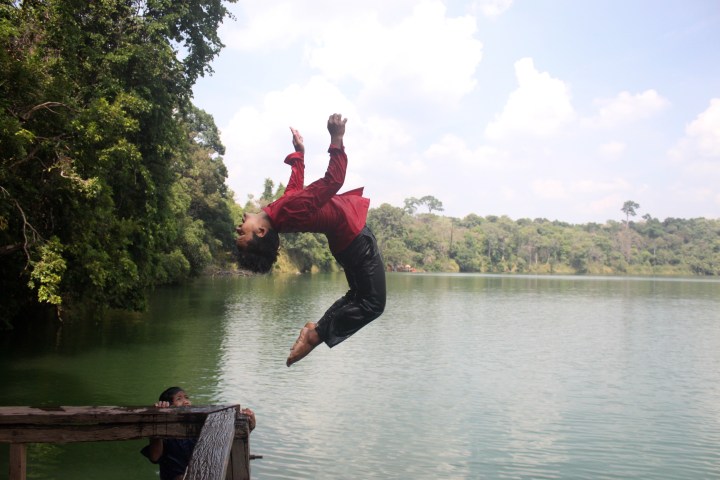
Alive in ’95.
Boeng Yeak Lom, Cambodia (2017)
Thank you for being with us today
Alive in ’95.
Boeng Yeak Lom, Cambodia (2017)

Sea of Love.
Barcelona, Spain (2017)
Honey: Selected Journals from the Years Away
From Book I: On Divar Island
6.7.16 to 9.7.16: Candolim, Goa, India
That night I went over to this place Bob’s Inn that was listed in Lonely Planet; I thought maybe I could get a job there, something more Under the Table than where I’d been looking. I’d brought the new laptop back to the Beach Nest and was in the process of setting it up; so while that was loading I figured I might as well try out the old MacBook Pro. And sure enough when I turned it on the thing sputtered to life, basically devaluing the $400 USD I’d just spent on this HP. But I was so astonished that I just shoved a flash-drive in there and started pulling stuff off it – movies and music and documents, etc. – in this mad-dash to recover my shit; and while I was at it I hooked up my iPod to update that as well; and then I’m realizing I’ve got these two laptops open, surrounded by flash-drives and USB cables and iPods and iPhones, just this total frenzy of electronics: it’s scary how quickly one can just plug themselves right back in. And pitiful, really, because I was sitting on the floor doing all this on the assumption that the ground was cooler for the MacBook Pro. I was thinking about what Swarmi said, about being plugged in; and if I was in fact just plugging myself right back in, not giving way to my animal instinct, as he said, my inner self, as he said.
So after pulling Iron Man off the MacBook, of all movies, I decided to shut it all down; and I cycled off to Bob’s with a newspaper under my arm, to sort of scope the bar out and see if they’d be hiring. Bob’s Inn was this cavernous place, a patio full of plastic furniture and artifacts of unknown origin: African-looking long-faced masks, framed black and white photographs of nameless groups, potted cacti, ornamental rugs hanging from clotheslines; the interior was just this small dim stony room, wrecked with decaying wooden armoires holding CDs and hundreds of dusty liquor bottles – back in the corner was a huge pile of them, broken glass sticking out. The place felt like the hull of some ship that’d been at sea for way too long.
I sat down, and almost immediately another white guy walked in. It was kind of hard to hide my surprise: I hadn’t seen another white person in Candolim since I’d arrived – other than Swarmi, but he didn’t really count. He was young, had this square face, short blonde hair, classic Aryan features. He spotted me and I nodded, and he came over. He said: Mind if I join you? I said: Sure. He sat down. He put a package of cigarettes, a lighter, and a motorcycle key on the table; he was wearing a yellow cotton V-neck and navy blue shorts with whales on them. He was German and his name was Max; he was taking a month to travel around India before university started up, majoring in Business Management. The waiter brought us two 500ml Kingfishers, strong: Max sent his back, saying he wanted a smaller one, and a lager. Then he told the waiter to move the fan behind us so it pointed our way. I said: You only want a small beer? He said: “I will get two small ones instead of one big one. It will stay cold that way.” He winked when he said this for some reason.
The main thing about Max was that he smoked like a chimney, and was constantly blowing a short puff of air up towards his hair – as if trying to move it out of his eyes, even though it wasn’t nearly long enough to warrant that. Also, in response to pretty much everything I said, he made this short farting noise with his mouth. So like when I said I was riding a cycle – fart noise; I was paying Rs. 400/day in rent – fart noise; it’d cost me $900 USD to fly here from America – fart noise. He asked me how I’d gotten my phone, so I told him; he mouth-farted, said he’d filled out no paperwork, just rolled up and gotten a SIM. He asked what my budget was, so I told him – about Rs. 1000/day; he mouth-farted, said: “You’ll never make it.” I couldn’t understand why certain people felt the need to put other travelers down, prove they were better at this. He seemed particularly set on this theory that one should eat only one meal a day, at around 3PM, that consisted of multiple dishes. It wasn’t really a money-saver, as far as I could see, but he was convinced this was the way to go.
So it was pretty clear that Max was an asshole and a know-it-all, but like whatever. Plus he offered me beer, which I accepted; and then cigarettes, which I also accepted. He told a story about how he’d been smoking pot on some rooftop in Varanasi when this guy started having a seizure; so Max had I guess gotten a wooden spoon in the dude’s mouth, or whatever you’re supposed to do for a person having a seizure – and, as Max put it, “saved his life,” and so everybody on the surrounding rooftops started clapping and cheering for Max in this epic sunset ovation. He told a story about how he’d done acid in Australia on this outcropping – he kept using that word: “outcropping.” We got in something of an argument when he became convinced that if you spit on the street in New York or Los Angeles you’d get fined; I told him I’d never heard of that. But he was sure – he told me like four times: He was sure.
He seemed to be one of those business-types who’d had their minds cracked open at some point, and had realized there was no order or meaning to anything – and instead of being scared, like I was, he was enthralled by it, having a laugh. “We’re nothing but bacteria here,” he said at one point. “And we’ll be done (fart noise). The Sun and the Earth are talking. Sun says: ‘Earth, why do you look so down?’ Earth says: ‘I’ve got these humans living on me.’ Sun says: ‘Don’t worry about it, they’ll be gone soon.’” And then he sat back and crossed his arms, as if there was some profound point to what he’d just said.
It turned out he was staying at D’Mellos; we paid and headed out to the street. The rain had let up; the road was slick and white, reflecting the sparse streetlights. I got on my cycle and started riding, and pretty soon Max was alongside me on his scooter, putting a hand on my lower back; he pushed me back at his speed. When we got to our lane, we turned and he did it again. The path was dark, the sand turned muddy – the whole thing was foolishly unsafe, especially after drinking; I remember writing the sentence in my head: “Death seemed, if not imminent, at the very least nearby,” and then repeating it back to myself over and over.
He pushed me back to D’Mellos with him, and it began to rain. We walked through the compound towards his seaside room: he’d gotten one of the good ones with the queen-sized bed and balcony. Inside his clothes were strewn everywhere, backpack open with its guts hanging out, Lonely Planet on the bedside table – I realized he wasn’t much better than me, we were drawing from the same shit. He was actually farting now. He’d gone to Panjim that day as well: “Nothing for me there,” he said.
He pulled two glass tonic bottles from the mini-fridge, removed the Schweppes wrapping – he said he couldn’t handle plastic. That actually made me like him more – it humanized him. He emptied some of the tonic over the balcony and began pouring in Bombay Sapphire. He said, multiple times, that the English used to drink gin and tonics here – that the tonic was a natural mosquito repellant, but since the English couldn’t stand the taste they added gin. He seemed to get a real kick out of this. I didn’t understand what everybody had against tonic. We sat down on the balcony, and he showed me his flask: clear glass, silver finish, cap a shot glass, came in a leather holster. It had belonged to his grandfather. It actually was pretty dope. I wanted to ask if his grandfather had been a Nazi, because that seemed like some shit a Nazi would have; I wanted to know if perhaps his ancestors had killed my ancestors. But I figured Germans were always getting asked about Nazis, and he was probably sick of that.
He pulled out some weed he’d gotten in Mumbai and showed it to me. It smelled exactly like oregano. He rolled a massive joint, lit it, smoked it, passed it to me – I inhaled deep, too deep, and my lungs caught fire, clutching myself, coughing. Usually when this happened I’d say something like: “It’s been a long time,” but I didn’t feel like explaining myself to him. I felt sufficiently drunk and maybe high and wanted to go home. I wasn’t even going to watch Iron Man anymore – fuck that. When the rain let up I took my leave. He asked if I wanted to come with him tomorrow, wherever he was going; I said no, it was a writing day. I’d done a very bad job at Bob’s Inn of convincing him, and myself, that I was indeed a writer. I told him to come by my place when he returned; he said he’d look into getting us some acid. I said alright, and left. I stumbled back through the damp dark foliage, through the jungle, my feet sloppy with mud. I knew – then and when I awoke – that I never wanted to see him again. I fell into bed, the world spinning; I pulled up a Newton’s bag in case I vomited.
When I awoke, a mosquito had gotten me twice on the back of the hand; hives were blooming. I knew it was the same one from the previous night; I knew he was in the room still. I knew we were waging a war, him and I – maybe that was the animal instinct: that one of us must die. I pictured him all bloated from draining me; I pictured killing him, my blood splattering everywhere in great big arcs. I’d have to lure him in with my flesh; it was the only way. But for now I crawled beneath the cocoon of my blanket and fell back asleep.
~~~
Max came by at 4:10PM, knocking on the door and yelling: “Drug Enforcement Agency!” I was naked; I’d been putting on aloe to help with some sunburn from that day; I’d laid out at the beach, in my speedo, without sunscreen, listening to the Avalanches’ Wildflower. At the beach was another guy who didn’t know what to do with himself. First he ran along the shore taking a video of himself, then he tried laying out for a bit; then he went in the water and got knocked over by wave, then spent a while trying to recreate the scenario without getting mowed down. When I got back home I was putting on aloe and feeling quite miserable, and noticing some blotchiness on my shoulder that could only be sun poisoning.
So I let Max in, and he took a look around and said I had a pretty good set-up. He said: Did you forget we were supposed to meet? I said: I thought you were coming here. We chalked it up to simple confusion. So we got on his scooter and headed towards Baga Beach, where he said the people were. He was talking about this techno party on Friday, and how we ought to do drugs and go. He seemed a little confused and even anxious about what types of drugs we ought to do and when. He was very adamant about spending an entire day doing acid, though. In fact when we got to Baga he made me take down this dealer’s number, a guy named Abi who was selling acid for Rs. 900. Max said to Abi: Is it shit though? Abi said the good stuff was Rs. 1300. Max said we’d be in touch.
Down at the beach, tons of Indians were standing around, staring out at the water and overcast sky. Some of them were drunk, falling over; others were picking up handfuls of wet sand and dropping it on their bald friends’ heads. All the men were in various states of undress: underwear, boxer briefs, undershirts – the material clinging to them in unflattering ways, all of them drenched. The women were fully clothed and dry. Max and I found a bar and sat down at a table facing the shore. We were both looking for girls. I asked Max if he liked Indian women, and he said not so much. There was a table of girls in front of us, drinking Miller High Life; two of them looked quite good. Max ordered his small lager and I ordered my big strong. There was a dog roaming around; it had a big black circle around his eye that looked like it’d been burned on. The dog sidled up near us and Max began petting him, waxing on about acid and ecstasy, and I knew if I didn’t stand up for myself I’d end doing it all with him.
Men were walking along the beach, amongst the tables, offering massages – dark, haggard men with beady eyes. Max said he bet they were massaging the dogs and then massaging the people, and then he laughed; I felt like the joke maybe didn’t translate as well as he thought it did. Two of the cute girls wanted massages, so the beady-eyed men got down in the sand and took the girls’ feet on their knees, kneading away. I said: “They should be paying the girls to get to do that.” I was feeling buzzed. One of the girls, wearing large sunglasses and taking a photo of herself, wasn’t getting a massage; I got this bright idea to go over there and offer her one. I told Max about it, tried to get him to dare me – maybe he’d buy me a beer if I did. He said no; he said giving her a massage would be like giving your grandmother one, and then he laughed horribly again.
I was looking over at Max: he was reclined, petting this burnt-eyed dog, staring out at the water with narrowed eyes; later, I’d picture him holding some kind of thin long stick, or riding crop, even though he certainly hadn’t been. He looked like a British conqueror, or colonialist, surveying his land. You could see it all in his eyes, even if you couldn’t define it: some mixture of superiority, disgust, repulsion; but then also something enraptured, fiery – something, like, erotic almost. It was weird. I was feeling buzzed. A dog with three legs hobbled by; I said it made me sad; Max said it didn’t for him. He said they weren’t like the dogs we knew. He said when he was in Australia, he’d gone hunting with only a knife and a pack of dogs; they’d been out there catching and slaughtering pigs. They’d get the babies too, he said. I asked if they ate them. He said no, they were all filled with these gross squirming worms.
We finished our beers, and I told Max I was tired and wanted to go home. So we left. When I got back, I was so emotionally defeated and depressed by the whole thing that I just sat at my desk and ate three bags of chips in quick succession.
~~~
The next day I headed to Mapusa to have a look at the market. There wasn’t much to see: mostly aisles of tarp-covered bamboo stalls selling junk at a mark-up, and then this decaying concrete structure of small shops all packed with the same shiny tin pots and pasta strainers. When I walked in this woman in a turquoise sari fell in line beside me and said I had a very nice face, which was a sweet thing to say. Then she said I looked like an Indian David Beckham, which didn’t make a lot of sense but was sweet as well. Soon, though, it became apparent that I’d been snowed in and she just wanted to get me into her shop. So she followed me at a distance for some time, which was making me rather uncomfortable – and I had to duck through a couple of lanes to lose her. She caught up with me again as I was leaving the market and ushered me towards her shop, which was actually just a duffel bag on a stool outside a closed gate. I said: Well, you’re not even set up here, and I walked away. I immediately felt pretty bad about that, as if I’d meant: Well, if your presentation weren’t such shit maybe I would have actually bought something – when really there’d never been a chance I was going to.
On my way back down the lane towards the Beach Nest I ran into Max, who was on his scooter heading up to Baga again. He mentioned the techno party that night, and I said I was down; I was actually excited at the prospect of it, even willing to spend money – I was viewing it as research for some unknown project. So I said I’d come by his place at 7PM after I’d picked up my laundry. He laughed, like laundry was the funniest thing in the world. Then he said alright, and rode off.
~~~
So I was sitting down by the soccer field, eating bhel and waiting for my laundry to be done. The laundry shop was this little alcove behind the phone hut that offered a reasonably priced wash, dry, and press. There were three guys playing soccer, kicking the ball in ridiculous parabolas around the sun-dipped stadium. I always feel a little self-conscious watching people excel at sports, like I’m back in middle school and my inabilities are on full display. I remember one time in middle school I was in gym class and we were all sitting on the three-point line. Our coach was this lady Mrs. Shaw, this massive caramel-colored mushroom of a woman with blue veins popping out of her exposed calves – she always wore shorts and sneakers and long white socks. So Mrs. Shaw brought three kids up to the free-throw line and had them start shooting baskets, endlessly. One of them was this white kid Alex who rode my bus; Mrs. Shaw was yelling at him: “You’re shooting bricks! You’re shooting bricks!” Alex kept getting the ball passed to him and kept shooting, and Mrs. Shaw kept calling them bricks; Alex was tall, had swept-aside bangs, oily dark skin, a lilt in his voice. I remember being particularly confused as to what shooting bricks actually meant: like if Alex was throwing the ball as he might a brick, with that consistency; or perhaps it meant that he wasn’t putting time or care into the thing, just routinely tossing it off from a pile of bricks. The gym was wide and full of echo and the overhanging caged bulbs made everything look the way stale piss smells. I wasn’t even entirely certain that shooting bricks was a bad thing.
After I’d dropped back my laundry I went over to D’Mellos to get Max. His door was open and he was sitting on the balcony; I could see his blonde head protruding above the wicker chair. It was bizarre to see him there, alone, not animated or wild, just sitting. I knocked and went in. He got some tonics out of the fridge and cut off the plastic. I was holding this aloft as his defining characteristic – it was the only thing that made him in any way human. So he fixed us a drink and started in again on how we ought to do acid. I told him I couldn’t, told him I thought his purpose in my life was to plant this seed and then later I’d do it on my own. He didn’t seem to care about that. He kept saying I was an old man, that I was afraid, that if I gave him three days he could really show me something. I couldn’t understand why everyone was always trying to show me something.
We sat down to drink; Max looked out at the sea and said he’d been thinking that day about what he’d do if there was a tsunami – if he looked out at this exact view and saw a massive wave heading towards him. He said he’d hop on his scooter and ride up to Fort Aguada, the highest point in Bardez; but he’d probably die anyway, and he’d be okay with that. That’s why you had to live every day to the fullest, and otherwise fuck that shit. I was silent, so he asked if I agreed. I said: No, not really. That yes, every day matters, but you’re also answering to something larger – something of yourself in the past and something of yourself in the future. He loaded his pipe and smoked.
For some reason I asked Max what he thought happens when we die. Sometimes I ask people that. He said that nothing happens, and then he mouth-farted. I said but how about when you’re on drugs and can see the Other World? He said you could only see that because you were high. I said: So then is it not real? He said: No, it is. It felt like he was just making shit up at this point.
Max was quite indecisive re: going to the party, talking about money and how he’d driven by earlier and it looked lame – but after smoking and drinking he said fuck it let’s go. We discussed whether to wear pants or shorts. It was dark now, us sprawling forward through his scooter’s headlight towards Calungute and then Baga. Max stopped off for cigarettes.
Pretty soon we were lost, and Max kept having to ask people the way; he’d always start by saying: “Sorry sir,” and it seemed like almost a nervous tic after a while. The problem was that everyone we asked just told us to go straight, or take a right, with no real consensus of an actual direction. This all seemed like some real back-roads shit, like we were riding through this black tunnel of foliage at unforgiving speeds. Max told this story about how he’d been pulled over for not wearing a helmet and not having an international license, and the police had wanted Rs. 1300. So Max had said he’d pay them, no problem, but he’d need a receipt – and that’d really got them, so they’d made him pay just Rs. 100 and let him go. I told him that was actually a pretty smart move on his part. Eventually another guy on a scooter said he’d just take us there, so we followed him until a flashing sign appeared in the darkness that said Café Lilliput. Max said: “Just let me do the talking,” because he was going to try and get us in for free; I said alright. We got to the door and the bouncer said: Rs. 500, which I didn’t think was so bad. Max said he wanted to have a look inside, but the bouncer said no. So Max looked at me and I shrugged; so we got out our wallets and paid and went in.
The place was nearly empty, with a DJ blasting techno from his raised platform and people sitting around in deep booths looking practically comatose. I needed a drink immediately. The club was seemingly built into the cliffside, with all the tables facing out towards the grand dark expanse of the sea. Down at the shore, a girl in a long dress was dancing lazily in the surf, letting her sandals dangle from her hand, backlit by the pink and blue lights. Max and I got a table on the beach beside a group of two blonde girls and a guy. They were all wearing very earthy clothing. I asked Max if he would talk to them, and he said eventually. After a few drinks he yelled: “Hey, fellow white people!” and they laughed and we moved our chairs over to them.
The music was too loud to hear any of their names, other than the guy who was Thomas. I was sitting next to the taller blonde, who’d just graduated from university; she was visiting her sister, the shorter one, who was on a gap year. I was hearing maybe 30% of what she was saying, but I just kept nodding anyway. Max ordered a tower even though no one wanted it. He kept making toasts to “Health and Socialism!” and I was quite embarrassed. I told Taller that I didn’t really know him and he’d just come up to me in a bar. “He’s very German,” she said, which I hadn’t thought about. These three were English: Taller was in the art world, but had realized that a curating job at, say, the Tate Modern, only paid 20,000 quid a year. I said that was unbelievable. I was still going off the idea that $60,000 USD was pretty good, based on what my friend Alexander Hersh had told me his parents made when we were in Kindergarten. At the time I think he’d been bragging, but the number had gotten stuck in my brain so that I was still using it as a measure.
The thing was that with the beach’s incline Taller kind of had the higher ground, and so I was leaning over in a less-than-ideal pose to hear her, and her face was thin and bulgy around the eyes, but she was quite tall and had great legs and reminded me of Maddy Norris; and so I was trying to think of a way to initiate some kind of romance. The current kept rolling up, the tide coming in, splashing all of us; and my shorts were soaked and my flip-flops had drifted away; I’d had this bizarre sensation that I’d lose them that night, I’d told Max before we’d even left. I tried to explain to Taller my vision of Max as a malevolent colonist with his riding crop, but I wasn’t doing a good job. I was realizing that in social situations he was much more of a Hurt than a Help. Shorter said that he was quite drunk, and I said that he was my ride home. Him and Thomas were discussing Max’s socialism toast, and then Max was trying to convince Thomas to do acid with him even though the three of them were leaving the next day. They’d paid nothing to get in, which I think embarrassed Max because he said: “Well, I talked him down from 1000!” which wasn’t even true; it made me wonder what else he’d lied about. “All he wants to do is drink and do drugs,” Shorter said to me. I said it was best not to engage with him. I said to Taller: “Listen, I have to go the bathroom, but I’d really like to keep talking with you. Will you be here when I get back?” I sounded like a talk show host, I think because I’d been watching a lot of The Larry Sanders Show. She said yes, she wouldn’t be going anywhere, where would she go.
So I went to the bathroom. I peed and then leaned against the sink for a very long time. You could hear the desperate thump of the bass, trying unsuccessfully to activate someone, anyone. But the club was just this loud empty chamber.
I sat back down at the table, and the water rushed up and set our chairs afloat; everyone stood; I said to Taller: “Would you maybe like to walk along the beach?” but I don’t know if she heard me because at the same time she was saying that they were leaving. We followed them up the stairs, Max and I taking another table now that the beach had disappeared; Taller asked my name again and said she’d look out for my books, then left. Max and I sat back down together. He was ordering another beer, but I said I was done. I was feeling rather bloated. It was midnight. He was talking about drugs again, and the night, but I said I was tired and wanted to go home. He said I was an old man, and I was wasting my life, and I’d spend six months here and never live or feel or do anything, and I was choosing to be an old man – and I really hated him in that moment, and I thought about just throwing some money down and taking a taxi back, no matter the cost, just to get away from him, because I really hated him, and I could tell he was a bad person; and all the while I was staring out at the water as he hissed into my ear, berating me, like some little goblin trying to exorcise a beast from inside me. So I turned to him and said: “Has it ever occurred to you that I want to go home?” He said: What?” My face felt very red. I said: “Has it ever occurred to you, for one single second, that maybe I just want to go home and go to bed? To not drink anymore, to not do drugs, to not stay here?” As in: it wasn’t some involuntary system forcing me to feel this way, a system I needed prying from; as in: it was a choice. That I wasn’t weak or old – that I wanted this. That I didn’t want him.
But all he did was laugh, and sit back, and said we could still take E and it’d be fun; and we needed to dance a little bit before we left, I owed him that. I said no one was dancing. I said was going to the bathroom again, but really I just walked around to get away from him.
When I came back he was arguing with the waiter. The guy was small and thin and looked somewhat Ladakhi. They were screaming at each other. The conceit being that the waiter wanted to us to pay now – his shift was over, once we started a new tab he could leave – and Max wanted to keep the tab open and pay everything at the end. I could see what he was doing: he was trying to bring our bill down somehow, hoping he could cut a deal – but instead he was just screaming at the guy. The waiter stormed off and Max turned to me: “Okay man, you’re going to have to pay with your credit card, but I got him to take Rs. 200 off.” I said: “(You fucking idiot) Rs. 200 is less than whatever I’m going to get charged for using my card internationally.” Max said he knew that and he’d pay me cash – but I was done, I hated him so much, trying to stiff these people, keeping this guy from his home at fucking midnight; and so when the waiter came back with the card machine I got out my wallet that had been soaked by the tide and handed him Rs. 2000, and he said thank you and walked off. Max was silent for a moment, slumped back in his chair. Then he said: “Fucking Indians, man, always trying to take our money. Fuck that shit.”
I stood up, walked away, found our waiter. He thanked me for cooperating, and I said I was sorry for Max – because I really was, more sorry than I’d ever been, for the whole thing, for how this world had turned out, for this being how it was now – and I gave him Rs. 100, but I wish I’d given him Rs. 500 because although money doesn’t change anything it’s all I had other than my words being broken down by blaring music and blinding lights.
So we left. I didn’t have shoes anymore. Max was maybe drunk, and general logic said not to get on a bike with him. When we were out on the road he tried putting his key in the wrong scooter and got confused, which was a further indication that I shouldn’t get on a bike with him. So we rode off into the night; he was taking back roads, saying he wanted to avoid the police and that the main roads took too long. We slid down the long tunnel, him all the while saying he knew where we were, me all the while thinking I was going to die out here with this person I hated. He kept saying we needed to end the night with a smoke and a drink, end it right, until I yelled that I didn’t want to and he shut up. He said he’d known from the second we sat down with the English group that they weren’t what we were looking for. He said they were ugly; I said I thought Taller was kind of cute. He laughed. He said that Shorter had wanted it so bad, but she was fat – her arms were thicker than his. I was devising a plan in which I took out my pocketknife and stabbed him in the back, or used my weight to throw us off the road. He offered me a cigarette; I took it and watched the embers fly off in the wind.
I lied earlier. When I asked Max about the Other World, and what happens when we die, he hadn’t sounded like he was making shit up. He hadn’t laughed, or talked about drugs. He said: “When you’ve killed as many things as I have, and watched as many things die, you know there’s nothing.” I believed him.
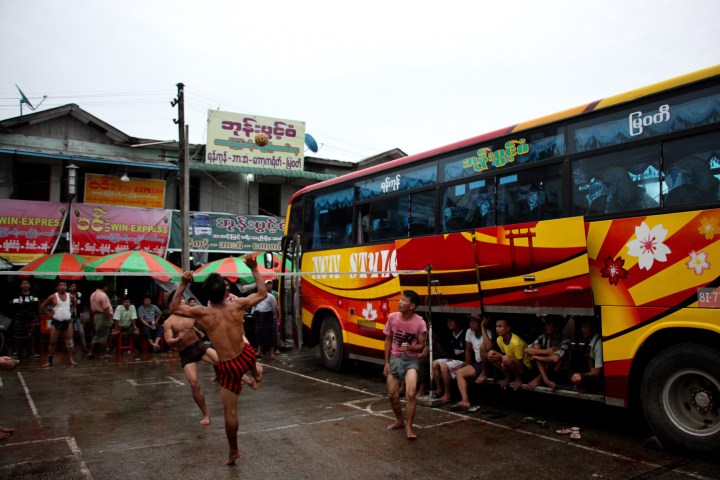
I grieve in stereo, the stereo sounds strange.
Mingalardon, Myanmar (2017)
Honey: Selected Journals from the Years Away
From Book VIII: She’s Gone
4.6.17: Son Trach, Vietnam (Part II)
Note: Please read Part I before continuing on with this section.
The villagers were kind. They sat with me while I cried, and when I was through they still sat with me. A man in a dirty white button-down brought in a smoking branch; he turned me on my side and pressed the burning leaves firmly into my wounds. There was a bright white pain, and I let a primal moan that made everybody laugh. He did it twice with the fresh wounds, and once with the old ones from other accidents. I moaned each time, mostly because I could tell the group enjoyed it. I felt better after crying.
I pulled out my passport and a few US dollars, passing them around. I wanted them to know who I was, and where I’d been. The blue-eyed man then started an impromptu Vietnamese lesson, which made everybody laugh because of my inability to mimic the intricacies of their language. More people arrived –twenty or so – hanging off each other’s shoulders, peering through the windows. I got up and looked around the room. There was a framed photograph of a young couple that looked highly airbrushed. Hung from an overhead beam were three certificates; I pointed at them and the blue-eyed man pointed to a kid, signaling they were from his school. The kid was climbing up a wall onto the landing above: a platform between the roof and the ground where they stored their belongings. He handed down the base of a hot water heater and the blue-eyed man put a hand to his mouth, meaning food; I nodded. But before we could the mechanic rode up on his scooter and everyone turned to hear him shout: “Let’s go!” He waved me over. So I said goodbye to the villagers and got on his bike.
When we got back to his house part of me actually assumed he’d completed the work and I could go. Instead he led me to the table, where someone had written in my notebook: I have to ride over 100km to fix your bike. The handwriting was surprisingly legible. The mechanic held up his wife’s cell phone, which via a translation app said: You can withdraw if you like. I wasn’t sure whether he meant: You can still back out if you want, or: You can withdraw money from an ATM. I thought the latter. I pulled out the 3,000,000d I’d hidden and held it up. He nodded. Then he pointed at me, at himself, at the scooter, and then off into the distance. I repeated the movements and said: “You want me to come with you?” He nodded. I said: Okay, fine, yes, let’s go.
So he started moving my shit into the house, which was when I started thinking properly about all this. I was leaving my things here, including Hawk, to go with this guy to some other location in an area I didn’t know. What was to stop him from leaving me somewhere and taking everything – stuff certainly worth more than the 2,000,000d he’d been promised? I was injured, disadvantaged; the only real risk was that if I survived I might come back and seek vengeance. But I probably wouldn’t survive. It seemed like a pretty good plan to me. I was thinking I at least had to take my laptop and journals. So I picked up my satchel and held it defensively, indicating: This stays with me. He shook his head and took the bag inside. I followed, so I could at least lock the damn thing – which was when I noticed that the lock was busted, scratched and hanging open. That gave me some pause. Because my bags had appeared unharmed in the accident, and it seemed implausible that I’d crashed in such a way that only my lock had broken. It was weird. But I had no choice. If this was part of some convoluted scheme in which I was eventually left for dead, there wasn’t much I could do to subvert the plan.
The mechanic said something to his wife, and she handed me a sweetened milk box and two packaged baked goods. I drank the sweetened milk. More than anything I wanted water, but I wasn’t sure how to convey that. I was banking on the possibility that wherever we were headed would have supplies. The mechanic retrieved one of Hawk’s parts – this clunky metal cylinder from the wheel’s center – and put it between his legs as he climbed on the scooter. I got on too, and we rode off.
We went back past the accident site, but then turned off HCM Road and headed inland. The mechanic was positively cheery. He kept looking back at me and then motioning out at the landscape – which was indeed quite beautiful, with the low sun now turning the ridges a deep orange – and I was glad he took pride in his country, but I couldn’t fully appreciate the scenery because I was feeling like I might pass out. I closed my eyes and thought: If you pass out you’re going to fall off this thing, and then you’ll be even worse off than you already are. He asked my name, and where I was from; but the majority of his English seemed centered on the phrase: “Let’s go!” I couldn’t imagine where he’d picked it up. At one point he gestured to the speedometer, indicating that we were going 80km/h, and gave a thumbs up. Speed wasn’t really something I wanted my attention drawn to post-accident. But all of this was relatively endearing, even if it was part of an effort to lure me into a false sense of security. The mechanic was incredibly young – maybe even teenage, despite having a wife and children. He was wearing a hat that had New York written on it in cursive. He was small, yet lanky; his face was tight and blurred, as if photographed mid-movement. He told me his name, but I forgot it.
After an hour we arrived in another village, stopping at a garage. It was a tiny shed with a guy working out front, and a girl on a scooter watching. The guy had a thin mustache and was wearing a short-sleeve button-down with Honda sewn into breast pocket. My mechanic and this guy started talking; but it seemed like the Honda Man couldn’t be bothered, because he didn’t look up from his work or reply at all. I had this vision of my mechanic always showing up here, trying to be cool with the rest of the mechanics, but not having the chops to be a part of their club; and now he’d brought along this American and was way out of his depth. Eventually my mechanic turned to me, gave a thumbs up, and said: “Let’s go!” We left the cylinder with the Honda Man and rode off.
Further down the road we parked in what seemed to be the center of the village, and the mechanic motioned to where I could get supplies. He went into a hardware store. I limped down the street and hobbled inside, looking for water. The place was more of a warehouse than a shop: palates of packaged goods running deep into the building. It was like a small, disorganized Costco. I walked down the aisle, holding aloft my pantomimed cup; the shopkeeper followed, pointing at stuff questioningly. I did some mock panting to show dehydration. She made a disgusted face. Then she pointed across the street to an abandoned storefront. Inside were several boxes of dusty water bottles. I bought two liters and staggered back to the hardware store, sitting beside the scooter and opening one. It tasted like fish. Soon thereafter the mechanic came out carrying a shiny new wheel and a bag of spokes; we got on his bike and went back to the Honda Man.
At the garage, my mechanic motioned for me to sit on the bench and indicated that he was going somewhere else. I really didn’t want that. I started to argue, but the girl waiting on the scooter yelled: “Sit down!” I did, and my mechanic drove off.
While I was waiting, a lady drove up with two kids – and when the kids saw me they freaked out. One of them started running around in circles, and the other hid behind a post. The lady kept trying to get them to come over, but any time she pulled the girl from behind the post she’d start crying. This at least lightened the mood, because now everybody was smiling. My mechanic returned, carrying two silver poles with these accordion-like rubber pieces on them. He sat down with the Honda Man, who was now ready to work on my wheel. He poured out the spokes and started attaching them to the cylinder. I wasn’t entirely sure what the methodology or pattern was here, but he seemed to know what he was doing. The thing looked like a big metallic ragdoll. While he worked, him and my mechanic chatted. My mechanic still seemed remarkably giddy, waving to everyone who passed and yelling: “Hello!” I was having trouble deciding whether he A) was thrilled that this was happening, and was digging the opportunity to fix a foreigner’s bike, and wanted everybody to know about it; or B) thought the whole thing was pretty funny, and the English usage was a means of teasing me, and the only thing he really dug was the 2,000,000d he was going to receive for a job that was worth quite a lot less.
Soon the wheel started to look like a wheel, and we were ready to go. I turned away while my mechanic paid the Honda Man. I didn’t want to know how much he was spending vs. how much I was paying. It looked like a 50,000d note. The mechanic handed me the wheel and we got on his scooter, driving off into the sun’s decline.
I noticed pretty soon, though, that we weren’t going the same way back. We were on a dirt road that ran beside a river, hidden in greenery; and then we were pulling past a gate up to a house. The place seemed recently built, clean and new; through the open door was a wide room, sparsely furnished. Out came two ladies, one young and one old. The mechanic talked with them, then indicated for me to follow. We went around the side of the house, where there was an overgrown well; the mechanic drew a pail of water. He washed his hands and face, then motioned to me. I put out my hands and he poured the water; I washed my face and hands and feet. I thought about washing my wounds, now caked in blood – but I didn’t know where to begin.
We went back to the women. The young one said: “Where are you from?” I said: “You speak English?” She nodded. I said: “Oh my God,” and she smiled. I felt like I had so much to say, so much to ask. I said: Who are you? Where are we? She said: “This is my brother and my mother.” This was their family home. “I was in a very bad motorbike accident,” I told her, and pulled up my shirt. She gasped, and the mom’s eyes got real wide. “Let me help you,” she said. The mom went to get a bottle of iodine. The daughter dribbled some on my haunch, and I howled. We didn’t put any more on. I didn’t want to go, felt I ought to take this opportunity to ask more questions, have the sister translate some basic information – but the mechanic was already getting on his scooter and handing me the new wheel. I asked: “How far is it to Khe Sanh from his home?” The daughter asked the mechanic, then translated: “He says 100km.” At which point I got on the scooter, and we left.
Now I was starting to understand. The visit to his house had been superfluous; we could have washed our hands anywhere. He’d wanted to introduce me to his family. He was excited, proud to be working on my bike. He was, in a way, showing me off. If nothing else, it meant he wouldn’t leave me: he was in it with me now. I was certainly alone, but I had him. So, at the very least, I didn’t have to worry about being left for dead in the middle of nowhere.
What I did have to worry about was whether or not he could actually fix Hawk. Everything I’d seen – his interaction with the Honda Man, the state of his house and village, the other bikes in his garage – it didn’t exactly point towards success. He might be out of his element. Hawk wasn’t some ubiquitous Vietnamese scooter – he superseded the ride-until-you-drop, Frankenstein-esque mentality of motor vehicles out here. Which is to say that the Vietnamese didn’t ride Honda Wins, didn’t know the bike like they knew their own. It may have been outside his skill set to fix such a bike, let alone such a problem; maybe he’d jumped at the opportunity without knowing whether or not it was possible. There was a chance that he’d said he could fix this in the same way I’d told Hans to go. I’d said it because I had to. Maybe he’d done the same.
When we got back to the village it was nearly 6PM and the sun was almost through. A group of men had gathered to watch the mechanic work on the foreigner’s bike, loafing around curiously. They stayed into the night, even after the sun had fully set and the mechanic had to get an elastic headlamp to continue. It was hot and dirty work, and now that the night had come it was as though the wildlife was taking over. Everything felt paradoxically claustrophobic.
I’d emptied the two water bottles on our way back, filling them up with petrol; I’d been afraid Hawk would be low on gas after the leakage and wouldn’t be able to get anywhere once the work was done. Luckily, the mechanic’s house had a drum of drinking water. Someone had retrieved my thrown bottle, placing it on the table; it was dented and upright, balancing precariously. Inside the house, all of my things were as I’d left them. Wandering around were two dogs, presumably father and son, playing: they’d bite at each other’s necks until one whimpered; then they’d stop, only to start up again shortly thereafter. The mechanic’s wife was mostly sitting – at the table, on the bedframe, in the hammock through the wooden door – openly breastfeeding. It seemed like she was almost exclusively breastfeeding that baby. I tried to give her space, but since she was always doing it I couldn’t really. She seemed relatively peeved by everything that was happening: my arrival, the crowd, the late night. She was a frumpy woman, wearing a brown t-shirt and navy blue pinstripe pants. I really wanted to use her cell phone, but she didn’t seem down to help. The only information conveyed was that it’d take maybe two more hours to fix Hawk. They had another daughter – four or five years old – with thin hair. She seemed desperately afraid of me.
The main dilemma what to do once Hawk was fixed. I was injured and alone, and it was dark. My options were pretty dire. Option #1 was to go back to Khe Sanh, since I’d at least done that route before and knew the way; I could probably make it in two hours and stay at the same hotel. Recuperate for a few days and try again. Eat at the pizza place a lot. But time wasn’t on my side: if I went back I wouldn’t reach Phong Nha for at least four days – I’d lose more time than I’d been trying to make up by going with Hans in the first place. Plus there wasn’t any guarantee a hotel would be open and willing to take me when I did arrive. Option #2 was to go on to Phong Nha, however long it took. Hans would be there, and I’d made a reservation at a hotel that was presumably expecting me. But I had no idea how long of a ride that was, except roughly 140km. And a secluded road, in complete darkness, while injured – it wasn’t ideal. Option #2.5 was to keep driving and hopefully find a hotel that was supposedly located along HCM Road – but I had no idea where that was, or if it even existed. And then the final option was to just stay here. It was the most logical choice, but it was the one I wanted least. I was hungry and thirsty and alone, and I wanted a bed and AC and food; these were primordial urges that could lead me to a less-than-objective decision. It felt like I was wandering through some convoluted internal maze, trying to sort all this out, no great solution, slowly panicking as I tried to formulate a halfway decent plan.
While the mechanic worked I used his wife’s phone to find the Khe Sanh hotel’s phone number – and when her phone couldn’t place the call I borrowed one of the crowd’s and walked out to the street. I just wanted somebody, somewhere, waiting for me. A man’s voice answered. “I was in a terrible accident,” I said. “I’m coming back, but I don’t know what time. Keep a room for me.” “We don’t have any rooms,” the man said. “Completely booked.” “Please,” I said, “I’m badly hurt. I just need a place to stay. Please help me.” “Come tomorrow,” he said. “Tomorrow doesn’t help me!” I yelled. “Tomorrow doesn’t help anybody!” I hung up.
It was completely dark now. The street was wide and silent, save for the buzzing of insects. You could see the stars accumulating, and a sliver of moon. Without the usual light pollution, everything was visible; it was all that illuminated the village, giving the scene that pale eerie glow the indifferent moon envelopes us in. It was clear that the mechanic’s house had no electricity, or at least didn’t currently. It didn’t make any sense. They had a refrigerator and a flatscreen television – within this shack within this abandoned temple – but no power to use either. They had singular light bulbs hanging from wires, but none of them were lit. The mechanic used his headlamp, the wife her phone – how she charged it I have no fucking clue – but otherwise the evening had turned black. It was only out on the road that you could see anything, from that dumb moon. Someone had started a roaring fire of orange down the way. I wanted to scream, hard and loud – to make it all as dramatic as it felt. But it was wrong. It wasn’t dramatic: it was real, strikingly so – raw, terrifying, clear, now. It lay out before me in some dry gasp of life.
The problem with Hawk was severe. The wheel was completely crushed, along with its metal cover. Broken spokes stuck out like claws. The new wheel was ready, but the problem was the forks – the two metal rods that held the wheel in place. Those were badly bent, and had to be removed and reattached – which meant taking apart pretty much all of Hawk’s front half. The hardest part was slipping them out of the bike: they were wedged in so firmly that it was nearly impossible to get them out. The mechanic ended up just using an old railroad spike and hammer and banging at them. Many of the screws were so tight that he had to take the spike and hammer and knock them loose, chipping the fresh metal – there was no other way. Hawk was new, and wasn’t going down easy. The whole thing was messy and ungraceful, covered in oil and filth, as we tried to pry apart this once beautiful machine while the night wore on. The mechanic detached Hawk’s headlight and let it hang, wires spilling out like multicolored guts. We sweat furiously. I was holding the handlebars, my shoulder pulsing with each hit of the hammer.
Once the old forks were out, it was just as difficult putting the new ones in. The mechanic greased them up, and I held on as he tried to fit them back through the holes at the base of the handlebars. In the narrow light of the headlamp you could see him squatting there, dripping, hammer in one hand and spike in the other. At one point he stopped, touched his stomach, and made a pained face: I’m hungry. “Let’s eat then,” I said. I was hungry too. But he just kept going. Once he’d gotten the new forks in, I realized that the attached reflectors and turn signals were inverted; I tried to show him, but he pushed my hand away. I could feel myself losing confidence in him. It seemed like we were trying frantically to repair something we knew nothing about. I couldn’t trust riding something like that. When he was through with the forks, I took a look: they still seemed crooked, like two legs trying to walk in opposite directions. I pointed it out to him, showing that they weren’t parallel. He took the railroad spike, chipped away the large screw at the base of the handlebars, and ripped them off; then he pulled out a triangular piece attached to a short black rod. He held it up for me to see. It was 8PM. Through the doorway his wife was nursing the baby, lying in the hammock, lit by her phone.
And then, suddenly, he started putting everything away. Placing his tools in the box, leaning the forks against the fence, putting the new wheel in his shed. Folding up tarps and shit. “What are you doing?” I said. He didn’t answer, just kept going. “What are you doing?” I yelled. I looked at the crowd watching us, darkened faces – no one answered. I was thinking he was sick of me, my constant butting in; that it wasn’t worth the money, that I was stranded again. Fear started crawling over me. The crowd was departing. When he was through he came over, placed his hands together, and rested his head there, closing his eyes: Sleep. We got the wife’s phone and she wrote: You sleep here tonight. Tomorrow, fix. Even though I’d seen it coming, I still felt this guttural drop. She handed me the phone. I had no idea what to write. I wasn’t even sure how to convey my feelings to myself, let alone to them. I suppose the closest description would be: there was this universal fear, a desire to be cared for, to be taken in – but more a fear of myself than the situation. Fear that I, personally, couldn’t muster the resolve to continue. We’ve all felt this. But relating it, sharing it with someone – it’s hardly possible. So I typed: I am sad. I held it up to her. I figured this was largely translatable. Meaning: I am sad. I am having trouble here. It is night and I am alone and I think I might be scared. But she only looked confused, yelled something to the mechanic, and took the phone back. The mechanic came out and motioned to the bed frame. I looked at him. Then I closed my eyes and nodded.
He took me to the water tank, and we washed our faces and hands and feet. We sat at the table inside and he put two small bowls before us, filling them with rice. The table was very low to the ground and appeared to be made from a bisected tree trunk. The only light was from his headlamp. He brought us a tin pot filled with a milky liquid, what appeared to be cabbage, and then curious pieces of meat – animal parts nobody else wanted, let alone knew existed. I put some of the broth on my rice. It’d been twenty-four hours since I’d eaten. He got another tin pot that had a yellow fish in it. The fish looked rotten, the eye staring up at us. I took a bit of that too, but it was mostly floss-thin bones. We ate in silence. I was feeling this internal cycle of despair, then acceptance of that despair, then despair again, etc. It was not lost on me that someday, possibly not too far in the future, I would look back and cherish this moment. This was, after all, what everyone was always pining for: the real, authentic experience. The type of thing we were all bitching about having been ruined – ruined by our very presence. But, like most unobtainable goals, the real thing was far more real than anticipated; and I was so tired and stranded that I could hardly appreciate it. It felt like some vital force had been dragged out of everything. There was no life here.
When we finished, the wife moved behind a wall on the far side of the room. She took the kids with her. You could tell she wanted to sleep, was sick of this shit. It was only 8:30PM, but we were going to bed. I was thinking that with no electricity, in the middle of nowhere, once the sun set you might as well go to sleep. So I went to the bedframe and pulled out my mosquito net, figuring I could use it as a blanket to protect from bugs. The mechanic was moving around inside. I went back to him, motioned typing, pointed to the wall where the wife was; we went over. I pointed to the phone and held up a finger: One more. She got out the phone and was pulling up the translator app.
I looked around. Back here they had the same bedframe I did, but there were four of them: the baby, daughter, wife, and mechanic. I said: “You all sleep here?” Pointed at them one at a time, then at the bed. The mechanic nodded. The little girl was looking up at me. The baby was sleeping. There was an odd silence that felt somewhat metallic.
They were living in squalor. I could see that now, and there was no way around it. They were four, sleeping on a bed that wasn’t even a bed, with no electricity, not even a light to show their way, eating leftovers of discarded animal parts, living in what appeared to be the massive abandoned shell of a building. There was nothing out here. It was squalor. There’s cultural relativism, but I couldn’t feel any different. It was nothing. There was no way around it. I was realizing that I was lamenting my one night here when it was their every night, and every day. It seemed unimportant how they viewed it: it was four people, huddled together on a bedframe, off into infinity. The harshness of it hit me. The stark contrast between them and me. You can see these things – Hans and I had hurtled past so many of them – but to really know it you had to stand there, in the room, before it. It was so very real and astonishing that I felt like I was lost all over again.
I took the phone and wrote one thing: the one question I needed answered: Can you fix my bike? I held it up to him. Because I had to know. What were we doing out here? What were we playing at? Could he do this thing? Or was it all just some fantasy we were pushing on with, neither or us knowing who we were or what we were doing, but trying so fucking hard to keep going regardless? Maybe it wasn’t him. Maybe it was just me, projecting myself out onto him – but it didn’t matter. I needed to know the truth. Can you get me out of here? Get me home? Can you fix my bike?
He looked at his wife, then touched a hand to my arm and guided me outside. We sat on the bedframe. He was typing. He said he’d fix the bike tomorrow. He said he would leave at 5AM and return by 8AM with the part we needed: that triangular piece. I tried to ask what time he expected to be done, but he either didn’t understand or didn’t know. Then he typed out something to the affect of: It will take more money. I typed back: We agreed on a price. I will not pay more. He typed something back that translated weird, like: Some bikes are bikes, and we have to let that go. I said I couldn’t pay more. He sighed. We were sitting very close together, lit by this fucking phone. The whole thing felt like a torture scene: neither party wants to be doing what they’re doing, but they have no choice because of the roles they’ve been prescribed. Like they pity for each other because of those roles. I said: How much? He said: 200,000d more. That didn’t seem particularly outlandish. I said: Fine. I again wanted to tell him I was scared, alone. I wanted him know how I felt. But he typed something about bed and about tomorrow, and I gathered that he wanted to sleep if he had to get up early for this shit. So I said okay, and he said goodnight, and went back into the house. He came back with two small pink fruits shaped like tulips. They were sour, but they were good. Then he closed to door and went to bed.
I lay down to sleep. I was in pain, both shoulder and wounds. Any movement set me grimacing. I had water, but I still felt incredibly dehydrated. Most of all there was the heat. From beneath the mosquito net everything was damp and hot and motionless. Occasionally a breeze would roll through the pavilion, but mostly there was just a static blanket of humidity. It was only 9PM, but it felt later. When a motorist would blaze by, igniting the night with the sound of an engine, the village spread out in light for a moment before falling back into darkness. I wasn’t panicking. I suppose I was too tired and hurt to feel anything except a desire for sleep. But there was still this nagging itch, living under my skin, calling out to me: Isn’t this what you wanted? To be alone, really? To be so far removed that none of it even existed? Why else find the ends of the earth and race towards them? Didn’t I want that, truly? To get lost out here? To die out here?
~~~
I awoke at 5AM. The mechanic’s scooter was gone. The door was still closed. The chickens and roosters of the village were crowing loudly. The two dogs were wandering around, sniffing at things and rolling on the concrete. One of them had gotten into the snack package I’d left on the table, and now the puppy was pawing at the wrapper, trying to get as much out as possible. Then he moved on to one of my hair ties and started gnawing at it.
I was hurting all over, but I’d made it through the night. Sleeping an hour at a time – any contact with my haunch was excruciating. The shoulder held more of a dull pain that seized up with any sudden action. I’d slept long enough to dream: I’d been getting my beard shaved off. Long enough to forget where I was and what I was doing. I got up and limped out to the road, the dogs circling cautiously. It seemed like, in the night, the animals ruled the land – we lost control to them. I’d been glad to be beneath my mosquito net. The street looked the same as when I’d arrived: the sun fully above and illuminating the foliage. So different from early mornings at home, back when I’d wake for swim practice: the ground frozen over, the air a brisk mist, so steely and defined. Everything was already alive here.
The mechanic returned at 8AM. He was carrying the new triangular piece, identical to the one he’d pulled out of Hawk. I assumed this was the extra 200,000d. It appeared, in the new morning, that we maybe stood a chance at fixing Hawk. I was worried, though, because we hadn’t ruled out that there wasn’t an internal issue as well: Hawk had been running post-crash, but that didn’t mean he’d run after all this. I’d tried to ask the mechanic about it, but he didn’t seem to care. I was afraid we were going to do all this and then the engine would fail; then I’d still be stuck out here, only to have to pour money into the fucking thing. But there was really nothing to be done until we got to that point.
What happened next was bizarre. Because basically the mechanic and I fixed the bike. Me in my boxers caked in blood, bandana holding back sweat from my eyes; him in a tank top pulled up over his stomach, so that it looked like he was wearing a sports bra; his wife breast-feeding on the hammock. I obviously knew nothing about motorbikes. After all this I wasn’t even confident I knew how to ride one. But it seemed clear that we were going to have to work together to figure this out. And so we did. We slid the forks back in and attached the turn signals, reaffixed the headlight and handlebars; he fit the tube inside the new wheel, and I took to the pump while he held it in place. We didn’t use words, because we didn’t have them. A lot of pointing, tripping over his rusted tools, covered in motor oil, my glasses slipping down, people crowding to watch, everything so elemental. It seemed like, in the daytime, things would be okay. Like even if the bike didn’t work, things would be okay. I understood why we’d gone to bed once the set had set. That was when hopelessness crept in, just like anywhere. That was when it all came down on you. Today it seemed okay.
The mechanic got the wheel cover, and took a rock and bashed it back to its curved shape. He looked like a caveman down there, squatting on the ground, knocking at the thing in some basic action. I had to give it to him: I dug his methodology. Once we’d reattached that, it looked like the work was done. So he got Hawk’s key and tried the ignition – the motor just churned. He tried the O2 valve, but that didn’t do anything. I pointed at the kick-start and he nodded, giving that a go – the bike spurted to life. He gave it some gas; Hawk growled. I motioned like: Take him out, see how he rides. I wanted him to go before me, definitely. He climbed on, looking even smaller than usual, and took off onto the street, sound echoing through the valley. He climbed up the road until he disappeared over the ridge, back towards Khe Sanh. I crossed my arms, satisfied. I was smiling. I could feel the happiness rolling over me in warm waves. I was realizing that I was happier than I’d been in a long time. I was realizing that perhaps I was paying him 2,200,000d for this happiness, giddiness, excitement. Hawk was okay.
When the mechanic came back he was really feeling himself. He started tightening screws and oiling shit. He pointed at one of the footrests that was askew, pulled off the rubber grip, revealed a small metal rod; then he grabbed a hollow pole from his shed and shoved the footrest inside, bending it back into place elegantly. I said: “Oh shit!” because that really was a smart move. Then I got on Hawk and took him out, pushing up to 4th gear. He felt different – the handlebars felt higher, narrower, and the metal wheel cover was banging around – but he was working. The mechanic had fixed him. We had.
I’ve often wondered why I got back on. You hear about people who get in accidents and never drive again – won’t go near a vehicle. And then you hear about people who get their arms bitten off by sharks while surfing, and the first thing they do post-recovery is get right back out there and surf. There was certainly no part of me that felt that pull – whatever pull it is they feel. I’d been in a major accident. I could have died. I’d been extremely lucky. When I looked upon my pseudo-goal of reaching Hanoi, it hardly felt worth it. In fact, when Hans and I had conferred after the crash I’d said: Maybe we should just go. As in: I get on your bike and we leave Hawk here. He’d said: You can’t. He wasn’t speaking to any larger, thematic concerns. He’d said: “You have no choice.” And he was right: I didn’t. If I was ever going to get out of here, I was going to have to strap my shit to Hawk’s back and go down this road. Literally pass the point of accident and go beyond. More than anything, the decision to continue was one of necessity. I couldn’t be scared, or timid. It was the only way.
When I came back, everybody was watching. I switched off Hawk and sighed. I let the silence grow as I walked to the mechanic. Then I shook his hand. Everybody started talking. I beckoned him over to the table and took out the 2,200,000d I owed him. We shook hands again. His daughter was running around in circles, screaming: “Goodbye, goodbye, goodbye.” I pulled out the American currency I had hidden; the mechanic looked it over. I gave him a dollar. He said: “Two?” I said: “Alright, fine,” and gave him another. Then I packed, while he put the petrol in the tank and the daughter and dogs ran together.
I felt an immense sense of gratitude towards the mechanic and his family. But it was more complicated than that. I’d paid him for his services – paid a lot, more than the parts and labor were worth – and without that payment I doubt the generosity would have come. And they weren’t necessarily cold to me, but they weren’t exactly friendly either. I say this wishing it’d been the opposite. I’d already traced the story in my mind: Foreigner gets stranded, injured in the wilderness; mechanic nurses him back to health, fixes his bike; the foreigner and the mechanic become lifelong friends. When I was a kid, I saw this episode of Oprah where an old couple was driving on the highway behind this car and they saw little pieces of paper and debris being pushed out of a hole in the trunk. They realized somebody was in there pushing the stuff out, which meant somebody was locked inside. So they called the police, and it turned out the person in the trunk was the girlfriend of the guy driving. Afterwards, they all became friends, the girl and the old couple, and the segment showed them all hanging out, the young kidnapped girl sitting in a lounger at the couple’s above-ground pool, like: They saved my life, and now we’re great friends. It struck me as a pretty weird friendship – like what did they talk about other than the time the old couple saved the young girl’s life – but it was a nice story. I thought my situation might be like that. But it wasn’t. The wife had displayed a withering ambivalence towards me; and the mechanic had oscillated between pointing out the majesty of nature, and then packing up his tools, gesturing to a bed frame, and asking for more money. The only resolution we’d come to was our mutual respect from fixing Hawk together that morning. But the night before I’d been scared and alone, wishing someone would simply hold me, and instead I’d been offered a dead fish. It was as much my fault as it was his. Within moments of arriving I’d called him a fucking asshole and thrown a water bottle. Meaning that this was a lot more complex than a simple above-ground pool friendship. There was no way to step outside of my own sphere of emotions – anger, fear, sadness – and understand how he was feeling. Perhaps he was happy I’d fallen into his hands, or pissed that he’d had to deal with this shit; or even scared, like the children who always ran from me. Maybe he felt nothing at all. I’d never know.
It hurt to pack up. Physically. The strength needed to pull the bungees tight strained my shoulder, the condition of which was still unknown. Once I was through, it was time to go. I tore out another sheet from my notebook and wrote: Thank you for everything. I won’t forget what you’ve done for me. Then I put my name, the date, and my email. I imagined someone would come along one day and translate it for them. Maybe they’d hang it on the wall in remembrance of this meeting. But after I handed it over the daughter took it and started flapping it at the dogs. So they took some pictures of me, and I took some pictures of them, and then the wife tried to add me on Facebook but I said I didn’t have Facebook. I shook the mechanic’s hand one last time; then I climbed on Hawk and rode out of there, waving goodbye to the crowd who’d gathered to see me off.
And I rode past the crash site, where a roll of gauze lay unspooled in the dirt, alongside the water bottle Long Nails had drank, and my smashed lens slept somewhere off in the brush.
It was hot, humid; the sun was pouring down. It was 10:30AM. Some 140km lay between Phong Nha and I. The road passed across wide green acres of rolling fields, then cavernous jagged mountains; it was the giant’s sidewalk once more, sectioned off ahead, twisting and turning, me taking it smooth. And then we were coming on through, and the whole thing opened up into the expanse: gorgeous, unknown, untouchable. It was something of the beyond – the endlessness of it. My camera was broken; there was nothing left to capture. It was isolated out here: no one. I was alone. This, I felt, was closer to the way I’d wanted it.
 Peter M. Raffel